It was created on June 28, 1825, at the Presidential mandate of Dionisio de Herrera, First Head of the Honduran State.
viernes, 1 de enero de 2016
Choluteca Tourism
The department of Choluteca is located in the southern part of Honduras and is one of the first 7 departments in which the country was divided during the first political division of Honduras.
It was created on June 28, 1825, at the Presidential mandate of Dionisio de Herrera, First Head of the Honduran State.
El Paraiso Tourism
The department of El Paraiso has a lot of culture and history in the many activities and cultural events both as artistic and religious are held. Importanes their cultural festivals are:
Moors and Christians
Easter Sunday: The carreritas San Juan (Yuscarán and Tegucigalpa)
Flower Festival and Café (jungles, El Paraiso)
Mango Festival (Yuscarán)
Corn Festival (Danli, Paraiso)
Guancasco between Texiguat and Liure (Texiguat, El Paraiso)
Moors and Christians
Easter Sunday: The carreritas San Juan (Yuscarán and Tegucigalpa)
Flower Festival and Café (jungles, El Paraiso)
Mango Festival (Yuscarán)
Corn Festival (Danli, Paraiso)
Guancasco between Texiguat and Liure (Texiguat, El Paraiso)
Lempira Tourism
The inhabitants of the department of Lempira is mainly engaged in agriculture and livestock. Its main crops are corn, coffee, sorghum, rice and snuff. Its provincial capital is the city of Thanks. His political division consists of 28 municipalities, 299 villages and 2,159 hamlets.
Yoro Tourism
Yoro department is located in the North Central zone Honduras, its provincial capital is the city of Yoro, which together with El Progreso and Olanchito are its most important cities. The land area of the department is of 7,781 km². Its population until 2012 was 571.569 inhabitants and its territory is divided into 11 municipalities, 263 villages and 2,015 hamlets.
miércoles, 30 de diciembre de 2015
Atlantida Tourism
The department of Atlantida was founded on February 24, 1902 taking part of the departments of Colon and Yoro.
Its creation took place in the Eighth Division Policy Honduras, as President of the Republic General Terence Sierra.
It is located in the north of the country and its territorial extension is of 4,251 km², the departmental capital is the port city of La Ceiba, the third largest city in Honduras. It has a population of approximately 450,000 inhabitants and its political division consists of 8 municipalities, 229 villages, 879 villages and more than 260 districts and colonies.
Olancho Tourism
Olancho department is the largest department in Honduras with 23.905 km².
It was created on June 28, 1825, when the territory was divided into seven departments during the First Political Division of Honduras.
Olancho department is located on the North Eastern part of the country and its population until 2012 was 530.644 inhabitants. Its vast territory is divided into 23 municipalities, 289 villages and 3,010 hamlets. Its provincial capital is the city of Juticalpa and Catacamas is the second largest and most important department, site where the famous city talgua caves.
Santa Barbara Tourism
History
The department of Santa Barbara was one of the seven departments originally created by the first head of state of Honduras, Attorney Don Dionisio de Herrera on 28 June 1825. Subsequently, he was President Domingo Vásquez made a division department and created the department Cortes on July 4, 1893. Its provincial capital is a city of Santa Barbara, the population of this department is approximately 400,000.
Ocotepeque tourism
Ocotepeque department is located in the western part of Honduras. Its territory is border bi because it limits the south with the Republic of El Salvador and West by Guatemala.
Copán
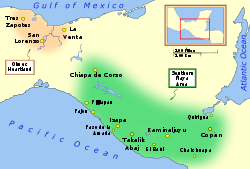
Copán is an archaeological site of the Mayan civilization located in Copan the department of western Honduras, not far from the border with Guatemala. It was the capital city of a major Classic period kingdom from the 5th to 9th centuries AD. The city was located in the extreme southeast of the Mesoamerican cultural region, on the frontier with the Isthmo- colombian cultural region, and was almost surrounded by non-Maya peolpe. In this fertile valley now lies a city of about 3000, a small airport, and a winding road.
Copán was occupied for more than two thousand years, from the Early preclassic period to the Postclassic. The city developed a distinctive sculptural style within the tradition of the lowland Maya, perhaps to emphasize the Maya ethnicity of the city's rulers.
The city has a historical record that spans the greater part of the Classic period and has been reconstructed in detail by archaeologists and epigraphers. Copán was a powerful city ruling a vast kingdom within the southern maya area. The city suffered a major political disaster in AD 738 when Uaxaclajunn Ub´aah Kawaiil, one of the greatest kings in Copán's dynastic history, was captured and executed by his former vassal, the king of Quirigua. This unexpected defeat resulted in a 17-year hiatus at the city, during which time Copán may have been subject to Quiriguá in a reversal of fortunes.
A significant portion of the eastern side of the acropolis has been eroded away by the Copan river, although the river has since been diverted in order to protect the site from further damage.
Location
Copán is located in western Honduras close to the border with Guatemala. Copán lies within the municipality of Copan ruinas in the department of Copan. It is situated in a fertile valley among foothills at 700 meters (2,300 ft) above mean se level .The ruins of the site core of the city are located 1.6 kilometers (1 mi) from the modern village of Copan ruinas, which is built on the site of a major complex dating to the Classic period.
In the Preclassic period the floor of the Copán Valley was undulating, swampy and prone to seasonal flooding. In the Early Classic, the inhabitants flattened the valley floor and undertook construction projects to protect the architecture of the city from the effects of flooding.
Copán had a major influence on regional centres across western and central Honduras, stimulating the introduction of Mesoamerican characteristics to local elites.
Native Animals & Plants in Honduras
Honduras, set in the Central American isthmus between Guatemala, El Salvador and Nicaragua, still lays claim to relatively large tracts of undeveloped landscape, from tropical rain forests to lagoon mangroves. This makes it is an excellent destination for ecotourists wishing to explore the wild side of this biologically rich region.
Vegetation Zones
The native vegetation profile of Honduras is diverse. A variety of tropical forests once flourished across broad areas, trending from lowland rain forest with massive buttressed trees to mist-socked cloud forests in the highlands. Among the latter ecosystems, the Central American montane forests -- an ecoregion defined by the World Wildlife Fund -- are distinctive with their blend of northern and southern plant families: Conifers like Guatemalan fir intermingle with tropical broadleafs. Patches of tropical dry forest persist in the coastal lowlands, while savanna abuts swamp and rain forest in Mosquitia. Rich pine-oak forests cover portions of the Honduran highlands. Remnant tracts of mangrove forest stud both the Pacific and Caribbean margins, especially in the Mosquito Coast.
Mammals
The remaining wild redoubts of Honduras still harbor some large mammals. Two large cats reign as top predators: the jaguar, a burly spotted feline with stocky limbs and powerful jaws; and the puma or cougar, a lithe tawny hunter that ranges from the Yukon south to Patagonia. Smaller cats include ocelots and margays. Two large mammals exceedingly common in North America also inhabit Honduras: the white-tailed deer and coyote. The country's largest terrestrial mammal is the Baird's tapir. Non-human primates include howler, capuchin and spider monkeys.
Reptiles
Among Honduras's most unique reptiles is the basilisk, a long-legged, crested lizard renowned for its ability to skate across water in bipedal fashion. More than 100 snakes inhabit the country; venomous kinds include the fer-de-lance. The country's heftiest reptile is the American crocodile, which in rare cases reaches 20 feet long; this pale-gray saurian is found sparingly across Central America and northern South America, and reaches its northern range in South Florida in the U.S.
Other Wildlife
Birdlife is plentiful in Honduras thanks to the country's varied habitats. The huge harpy eagle hunts its rain forests, picking off monkeys and sloths from the treetops. Another massive native bird is the jabiru, a tall, striking stork of thick black neck ringed in red and white feathers. Fish include a rich assortment of both freshwater and marine species, as well as a few, like the bull shark, that transcend both worlds, tracking up coastal rivers from ocean waters.
Viewing
National parks and other protected areas are the best places to see native Honduran vegetation and wildlife in their natural habitat. For example, visitors to the Río Plátano Biosphere Reserve can sample the wildness of a Mosquitia watershed, that of the Plátano River, a location designated as a UNESCO World Heritage Site. An impressive suite of habitats ranges from mangroves and coastal savanna to one of the region's greatest remaining swaths of tropical moist forest. Wildlife includes everything from manatees, sea turtles and American crocodiles to jaguars, giant anteaters and great curassows.
History of Honduras
was already occupied by many indigenous peoples when the Spanish arrived in the 16th century. The western-central part of Honduras was inhabited by the Lencas, the central north coast by the Tol, the area eastand west of Trujillo by the Pech(or Payas) and the Mayans and Sumo. These autonomous groups maintained commercial relationships with each other and with other populations as distant as Panama and Mexico
Pre-Columbian era
Archaeologists have demonstrated that Honduras has a multi-ethnic prehistory. An important part of that prehistory was the Myan presence around the city of Copan, in western Honduras which is near the Guatemalan border. Copan was a major Maya city that began flourishing around 150 A.D. but reached its height in the Late Classic (700-850 A.D.). It has many carved inscriptions and Stelae. The ancient kingdom, named Xukpi, existed from the 5th century to the early 9th century, with antecedents going back to at least the 2nd century.
The Mayan civilization began a marked decline in their population during the 9th century, but there is evidence of people still living in and around the city until at least 1200. By the time the Spanish came to Honduras, the once great city-state of Copán was overrun by the jungle, and the surviving Chorti were isolated from their Choltian linguistic peers to the west. The non-Maya Lencas were then dominant in western Honduras.
Honduras in the nineteenth century
In the early 19th century, Napoleon's occupation of Spain led to the outbreak of revolts all across Spanish America. In New Spain, all of the fighting by those seeking independence was done in the center of that area from 1810 to 1821, what today is central Mexico. Once the Viceroy was defeated in the capital city –today Mexico City- in 1821, the news of the independence were sent to all the territories of New Spain including the Intendencies of the former Captaincy of Guatemala. Accepting this as a fact, Honduras joined the other Central American Intendencies in a joint declaration of independence from Spain. The public proclamation was done through the Act of Independence in 1821.
After the declaration of independence it was the intention of the New Spain parliament to establish a commonwealth whereby the King of Spain, Ferdinand VII, would also be Emperor of New Spain, and in which both countries were to be governed by separate laws and with their own legislative offices. Should the king refuse the position, the law provided for a member of the House of Bourbon to accede to the New Spain throne. Ferdinand VII, did not recognize the independence and said that Spain would not allow any other European prince to take the throne of New Spain.
By request of Parliament, the president of the regency Agustín de Iturbide was proclaimed emperor of New Spain but the Parliament also decided to re name New Spain to Mexico. The Mexican Empire was the official name given to this monarchical regime from 1821 to 1823. The territory of the Mexican Empire included the continental intendencies and provinces of New Spain proper (including those of the former Captaincy General of Guatemala) (See: History of Central America).
lunes, 28 de diciembre de 2015
Cuisine
Cuisine
Honduran cuisine is a fusion of indigenous Lencacuisine, Spanish cuisine, Caribbean cuisine andAfrican cuisine. There are also dishes from theGarifuna people. Coconut and coconut milk are featured in both sweet and savory dishes. Regional specialties include fried fish, tamales,carne asada and baleadas.
Other popular dishes include: meat roasted withchismol and carne asada, chicken with rice and corn, and fried fish with pickled onions and jalapeños. In the coastal areas and in the Bay Islands, seafood and some meats are prepared in many ways, some of which include coconutmilk.
Culture
Creative endeavors
The Cathedral of Comayagua.
The most renowned Honduran painter is Jose Antonio Velásquez. Other important painters include Carlos Garay, and Roque Zelaya. Some of Honduras' most notable writers are Lucila Gamero de Medina, Froylan Turcios, Ramón Amaya Amador and Juan Pablo Suazo Euceda,Marco Antonio Rosa, Roberto Sosa,Eduardo Bähr, Amanda Castro, Javier Abril Espinoza, Teófilo Trejo, andRoberto Quesada.
Hondurans are often referred to asCatracho or Catracha (fem) in Spanish. The word was coined by Nicaraguans and derives from the last name of the Spanish Honduran General Florencio Xatruch, who, in 1857, led Honduran armed forces against an attempted invasion by North American adventurer William Walker. The nickname is considered complimentary, not derogatory.
The José Francisco Saybe theater in San Pedro Sula is home to the Círculo Teatral Sampedrano (Theatrical Circle of San Pedro Sula)
Religion
Although most Hondurans are nominally Roman Catholic(which would be considered the main religion), membership in the Roman Catholic Church is declining while membership in Protestant churches is increasing. The International Religious Freedom Report, 2008, notes that a CID Gallup poll reported that 51.4% of the population identified themselves asCatholic, 36.2% as evangelical Protestant, 1.3% claiming to be from other religions, including Muslims, Buddhists, Jews,Rastafarians, etc. and 11.1% do not belong to any religion or unresponsive. Customary Catholic church tallies and membership estimates 81% Catholic where the priest (in more than 185 parishes) is required to fill out a pastoral account of the parish each year.[49][50]
The CIA Factbook has Honduras listed as 97% Catholic and 3% Protestant.[1] Commenting on statistical variations everywhere, John Green of Pew Forum on Religion and Public Life notes that: "It isn't that ... numbers are more right than [someone else's] numbers ... but how one conceptualizes the group."[51] Often people attend one church without giving up their "home" church. Many who attend evangelical megachurches in the US, for example, attend more than one church.
Demographics
Honduras had a population of 8,143,564 in 2011.[1] The proportion of the population aged below 15 in 2010 was 36.8%, 58.9% were aged between 15 and 65 years of age, and 4.3% were aged 65 years or older.[45]
Since 1975 emigration from Honduras has accelerated as economic migrants and political refugees sought a better life elsewhere. A majority of expatriate Hondurans live in the United States. 2012 US State Department estimates[46] suggested there are between 800,000 and 1 million Hondurans living in the United States, nearly 15% of the Honduran domestic population. The large uncertainty is due to the substantial number of Hondurans living illegally in the United States. The 2010 U.S. Census counted 633,401 Hondurans in the United States, up from 217,569 in 2000.[47]
Economy
Economic growth in the last few years has averaged 7% a year, one of the highest rates in Latin America (2010). In 2010 50% of the population were below the poverty line.[40] It is estimated that there are more than 1.2 million people who areunemployed, the rate of unemployment standing at 27.9%. According to theHuman Development Index, Honduras is the sixth poorest/least developed country in Latin America, after Haiti, Nicaragua, Guatemala, Guyana, and Bolivia.
Honduras was declared one of theheavily indebted poor countries by theWorld Bank and the International Monetary Fund, and was made eligible for debt relief in 2005.
Administrative divisions
Further information: Departments of Honduras and Municipalities of Honduras
Honduras is divided into 18departments. The capital city is Tegucigalpa in the Central District within the department ofFrancisco Morazán.
- Atlántida
- Choluteca
- Colón
- Comayagua
- Copán
- Cortés
- El Paraíso
- Francisco Morazán
- Gracias a Dios
- Intibucá
- Islas de la Bahía
- La Paz
- Lempira
- Ocotepeque
- Olancho
- Santa Bárbara
- Valle
- Yoro
BY ERICKSON
Foreign relations
Honduras and Nicaragua had tense relations throughout 2000 and early 2001 due to a boundary dispute off the Atlantic coast. Nicaragua imposed a 35% tariff against Honduras due to the dispute.
In June 2009, Honduran President Manuel Zelaya was ousted in a coup d'état and taken to neighboring Costa Rica. Like several other Latin American nations, Mexico temporarily severed diplomatic relations with Honduras. In July 2010, full diplomatic relations were once again re-established.
The United States maintains a small presence at a Honduran military base; the two countries conduct joint peacekeeping, counter-narcotics, humanitarian, disaster relief, and civic action exercises. U.S. troops conduct and provide logistics support for a variety of bilateral and multilateral exercises—medical, engineering, peacekeeping, counter-narcotics, and disaster relief. The United States is Honduras' chief trading partner.
Political culture
In 1963 a military coup was mounted against the democratically elected president Ramón Villeda Morales. This event started a string of military governments which held power almost uninterrupted until 1981, when Suazo Córdova (LPH) was elected president and Honduras changed from a military authoritarian regime.
Today, the party system is dominated by the conservative National Party of Honduras (Partido Nacional de Honduras: PNH) and the liberal Liberal Party of Honduras (Partido Liberal de Honduras: PLH). Since 1981 Honduras has had six Liberal Party presidents: Roberto Suazo Córdova, José Azcona del Hoyo, Carlos Roberto Reina, Carlos Roberto Flores, Manuel Zelaya and Roberto Micheletti, and three National Party Presidents: Rafael Leonardo Callejas Romero, Ricardo Maduro and Porfirio Lobo Sosa.
The current Honduras president is Porfirio Lobo.
By ERICKSON
Ecology
The region is considered a biodiversity hotspot because of the numerous plant and animal species that can be found there. Like other countries in the region, Honduras contains vast biological resources. Honduras hosts more than 6,000 species of vascular plants, of which 630 (described so far) are orchids; around 250 reptiles and amphibians, more than 700 bird species, and 110 mammal species, half of them being bats.[38]
In the northeastern region of La Mosquitia lies the Río Plátano Biosphere Reserve, a lowland rainforest which is home to a great diversity of life. The reserve was added to the UNESCO World Heritage Sites List in 1982.
Honduras has rain forests, cloud forests (which can rise up to nearly three thousand meters above sea level), mangroves, savannas and mountain ranges with pine and oak trees, and the Mesoamerican Barrier Reef System. In the Bay Islands there are bottlenose dolphins,manta rays, parrot fish, schools of blue tang and whale shark.
by erickson
Suscribirse a:
Entradas (Atom)